Early Years Foundation Stage (EYFS)

Little Learners (Pre-Reception Provision for 3–4 Year Olds)
Little Learners is our dedicated pre-Reception provision, operating within the welcoming classroom setting of Praa Sands class alongside our older early years children.
-
Timings & Structure: Little Learners runs from Monday to Thursday, 9:00am – 3:00pm.
-
Expert Support: Your child’s learning journey is guided directly by the Praa Sands class teacher, supported by dedicated EYFS teaching assistants who work closely with them throughout the day.
-
Funding: Every 3-year-old is entitled to 15 hours of funded early years provision. For families eligible for the 30-hour funding scheme, these hours can be flexibly shared across more than one registered setting.
This integrated approach ensures a highly secure, familiar, and smooth transition when your child advances to full-time school.
Reception (Full-Time School Age)
Children join our full-time Reception cohort at the start of the academic year in which they turn 5 years old (birthdates from 1st September to 31st August).
- The Learning Environment: Reception children enjoy a discrete Early Years Foundation Stage Curriculum with their class teacher and EYFS teaching assistant, within the whole Praa Sands Class environment.
- Mixed-Age Benefits: By sharing their learning spaces and daily routines with Year 1 and 2 pupils in the same classroom, our Reception children naturally build confidence, language skills, and social maturity, easing their future transition into Key Stage 1.
Our Curriculum: The Seven Areas of Learning
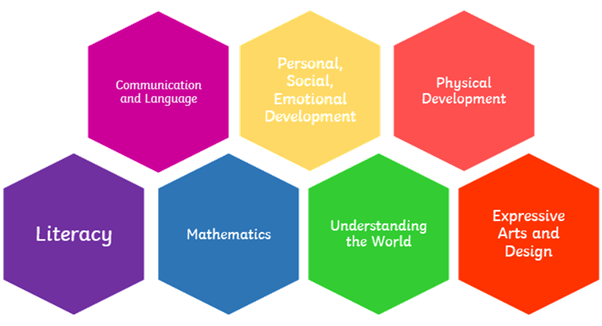
In line with the 2025 framework’s emphasis on meaningful, face-to-face interactions, our curriculum focuses on high-quality engagement. Pupils have continuous access to all seven areas of learning, balanced across our bright indoor spaces and our secure outdoor environment:
Prime Areas (The Foundations)
Communication and Language: High-priority vocabulary development, active storytelling, and back-and-forth conversations.
Physical Development: Gross and fine motor control, healthy habits, and safe risk-taking.
Personal, Social, and Emotional Development: Building self-regulation, empathy, and strong friendships.
Specific Areas (The Building Blocks)
Literacy: Phonics-led reading (via our Read Write Inc. program) and early writing.
Mathematics: Developing a deep, conceptual understanding of numbers and spatial relationships.
Understanding the World: Exploring our physical environment, the school field, and our dedicated environmental area.
Expressive Arts and Design: Creative expression through music, art, role-play, and design technology.
Useful links:
https://home.oxfordowl.co.uk/reading/reading-schemes-oxford-levels/read-write-inc-phonics-guide/
https://www.ruthmiskin.com/parentsandcarers/
https://whiteroseeducation.com/parent-resources
EYFS Safeguarding, Health & Welfare Compliance
In strict accordance with the updated statutory safety requirements, Trannack Primary School maintains robust policies to protect the children in our care:
- Attendance & Absence Monitoring: We hold a minimum of two emergency contacts for every child. In line with 2025 safeguarding mandates, all unexplained absences are proactively followed up on day one to safeguard child welfare.
- Safer Eating Practices: Mealtimes are treated as a supportive, highly supervised social experience. To minimize choking hazards, food is safely prepared (e.g., lengthways slicing), and staff sit facing children to maintain direct visual supervision.
- Allergies & Dietary Care: Clear, individualized allergy action plans are maintained, and all supervising staff are trained to identify and respond immediately to allergic reactions.
- Dignity in Intimate Care: When supporting children with toileting or nappy changes, we carefully balance high safeguarding visibility with strict respect for the child’s individual privacy and dignity.
- First Aid & Training: All staff counting toward our early years ratios—including any qualified trainees or apprentices—hold valid Paediatric First Aid (PFA) certificates.